Guide 04 · Flood mould cleanup
Floodwater, mould and safe cleanup: protect people before property.
After flooding, consider what the water may have carried into the building before cleaning begins. This guide covers personal protection, material decisions and dealing with dampness that could support mould.
Flood mould cleanup starts with understanding the hazards at the property. Water that has entered from outdoors may contain harmful substances or debris. Establish whether access is safe before collecting records or handling affected materials. The cleanup approach must address contamination as well as moisture, particularly where water has reached concealed parts of the building.
Questions to work through
Questions about flood contamination and mould
Is floodwater contaminated?
Short answer: Assume floodwater may carry contamination, regardless of its colour. Sewage, chemicals, sediment, harmful organisms and sharp objects may be present. Prevent children and animals from entering affected rooms, protect existing cuts and wash your hands carefully after contact with contaminated materials.
Can disinfectant or bleach make flood-damaged carpet safe?
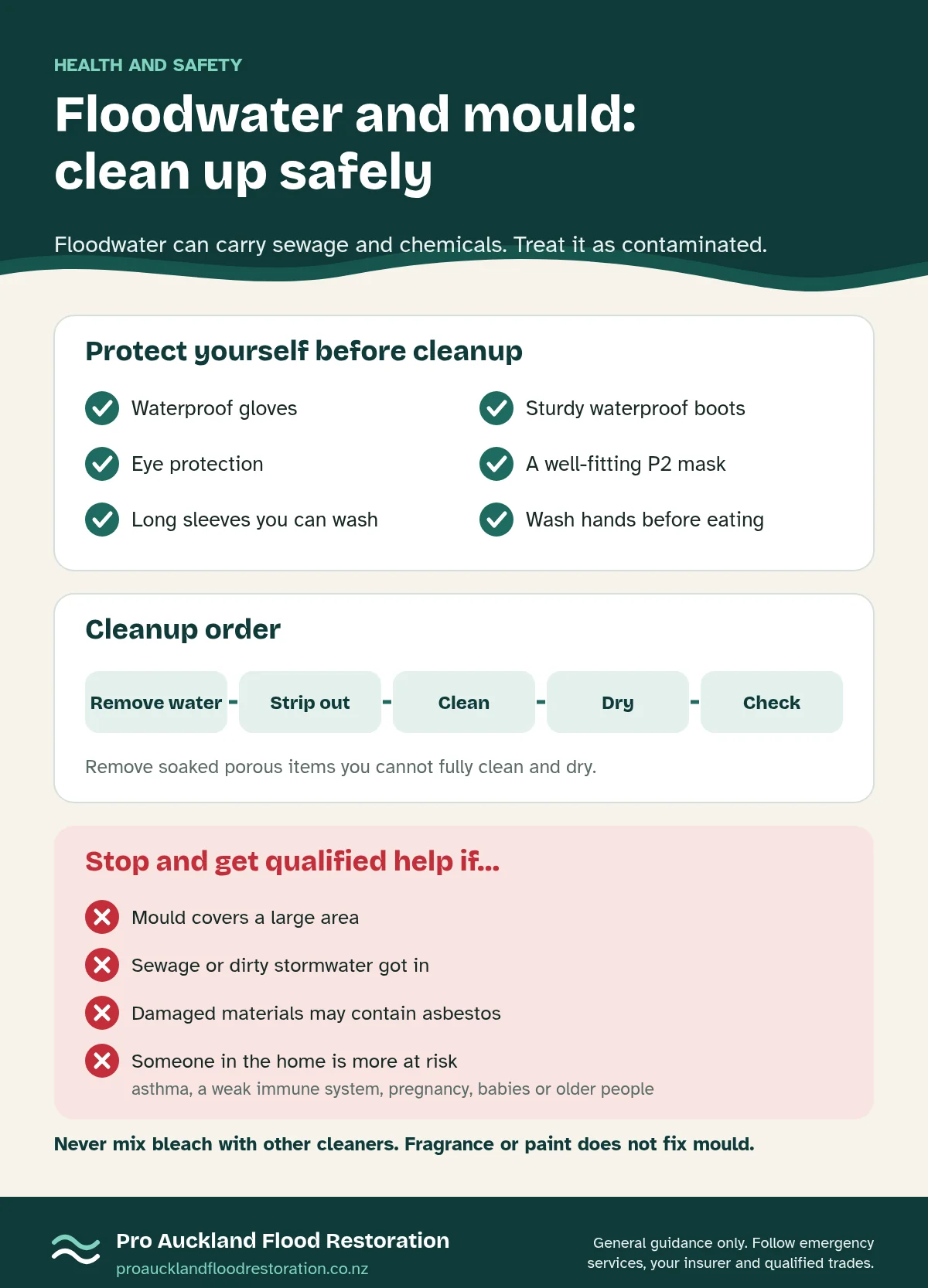
Short answer: Applying disinfectant does not establish that absorbent materials are suitable to retain. Carpet, cushioning, upholstery and insulation need their own assessment. The appropriate cleaning method depends on material and contamination. Bleach may be unsuitable for flooring, and combining cleaning products can create additional hazards.
Is it safe to walk or stay in an affected room?
Short answer: Normal use should wait until access, hygiene and building safety have been addressed. Water-exposed services, slippery or unstable flooring and contaminated materials may prevent safe occupation. Consider the needs of children and anyone with breathing difficulties when deciding whether to use an affected space.
Will flood damage cause mould?
Short answer: Moisture and humid indoor conditions can encourage mould growth following water damage. Investigate continuing mustiness, patches of growth or staining to establish whether moisture remains. Applying a fresh finish or using fragrance does not deal with the conditions that allowed mould to develop.
1. Floodwater is not ordinary rainwater
Water entering a home during flooding can introduce contaminants that are not obvious from its appearance. Sediment and debris may remain once the water retreats. Keep animals and children out of affected spaces and avoid unnecessary contact with damaged contents. Document the condition of the rooms only when entry is safe. Before disposing of belongings or flooring, ask the insurer what evidence is required. The wet carpet assessment guide explains why absorbent flooring needs particular consideration.
2. Use appropriate protection for cleanup
Select protective equipment according to the hazards and the work being undertaken. For flooded-home cleanup, use waterproof gloves, sturdy waterproof boots, eye protection, a well-fitting P2 mask and washable long sleeves. Cover exposed skin and protect cuts from contact with contaminated material. Wash hands before eating. Protective equipment does not resolve electrical, gas or structural dangers, and it does not make suspected asbestos safe to disturb. Obtain qualified advice where the task presents hazards you cannot safely manage.
3. Prevent mould by dealing with moisture, not masking it
When safe and appropriate, clean and dry affected materials promptly. Dampness can continue within flooring, insulation or wall assemblies after the initial cleanup. Investigate persistent smells and visible growth rather than covering them with paint or fragrance. Ask for further assessment if the source remains uncertain or mould continues to appear. Before damaged areas are enclosed, the relevant materials need inspection. The insurance and repair guide explains how to record the proposed work and checks before reinstatement.
Important: do not mix cleaning products. Choose cleaning methods that suit the material and contamination involved. If growth or mustiness continues, investigate the underlying dampness before arranging finishes or reinstatement. Do not use a new covering to conceal a problem that has not yet been assessed.
Sources and further reading
Ask about the next recovery step
If an emergency threatens life or property, call 111. For enquiries about flood restoration in Auckland, tell us where the damage occurred and we’ll confirm availability for your area.
Get help
Contact Pro Auckland Flood Restoration
Describe the affected materials and any known safety concerns when making an enquiry.
Registered Office
Lorenzo Chen11 Richard Farrell Avenue
Remuera, Auckland 1050
Our Registered Office is a postal and legal address, not a walk-in shop.