Guide 02 · Understanding building drying
How long does flood restoration take? Drying is a process, not a promise.
Understanding water damage restoration in Auckland begins with the condition of your property. Follow the stages of recovery to see what determines the drying plan and how moisture readings show when drying is finished.
Water does not necessarily stop at the boundary of a visibly flooded room. It can enter flooring assemblies, reach wall cavities and collect within absorbent materials. Before deciding how to dry a building, establish where moisture has travelled and whether contamination or damage changes the options for recovery.
Questions that shape the recovery plan
Water damage restoration in Auckland: assessing the drying requirements
What does flood restoration actually include?
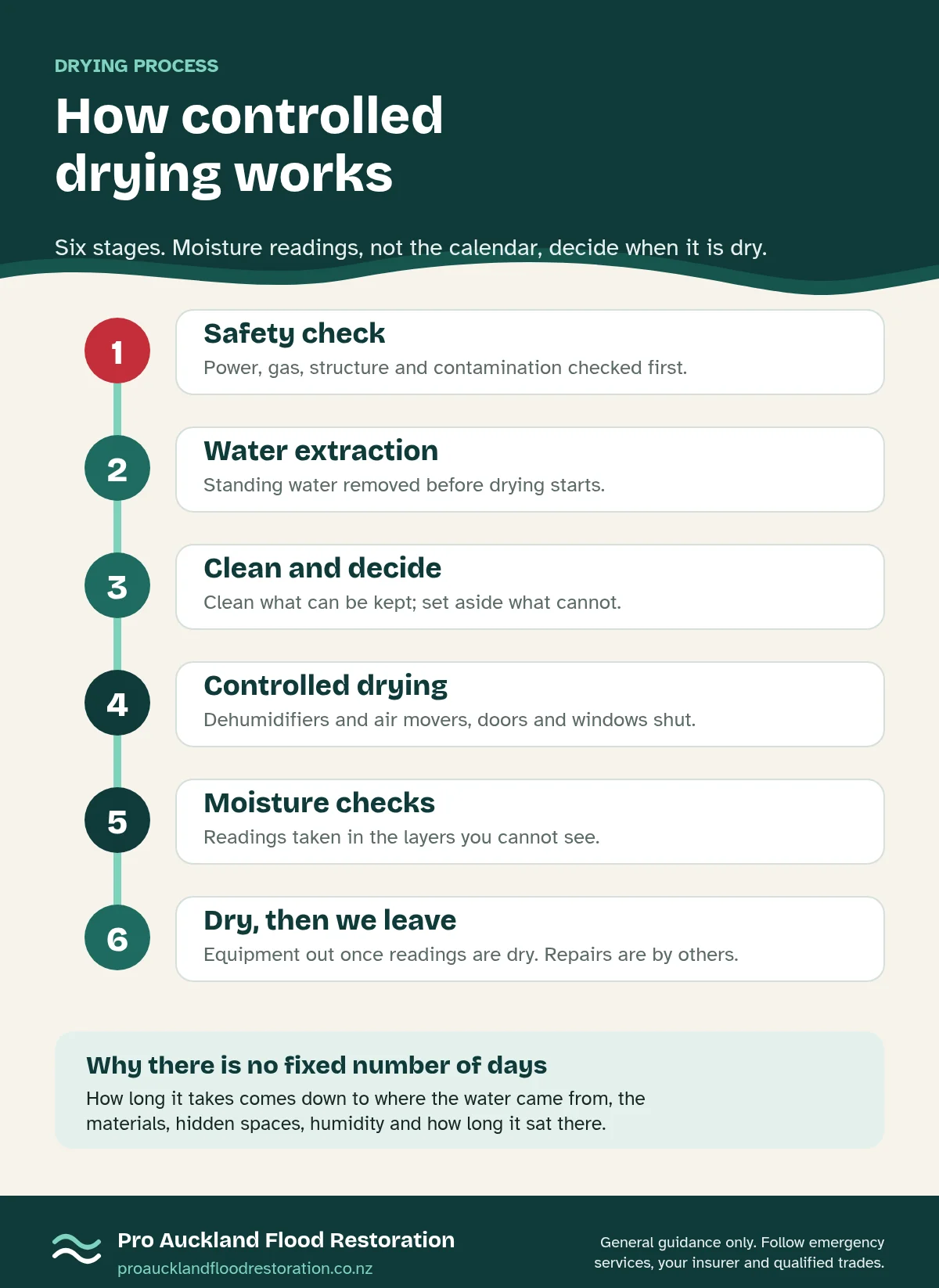
Short answer: Recovery involves establishing safe access, recording the damage and addressing water within the building. Decisions about cleaning, retaining materials and drying follow that assessment. Our part is extracting standing water, the drying and the moisture checks: once readings show the materials are dry, we remove the equipment. Any repairs that follow are carried out by your own builder or your insurer’s, after the structure has been checked.
How fast should drying begin, and how long will it take?
Short answer: Begin appropriate recovery measures once access is safe and the relevant insurance instructions are understood. The duration depends on how extensively water has penetrated the building, what materials are affected and whether contamination complicates cleanup. A calendar alone cannot establish when those materials are ready for repairs.
Do wet walls, insulation or flooring have to come out?
Short answer: Removal depends on what the materials are made from, their condition and the nature of the floodwater. Some layers may require access for assessment or drying. Discuss proposed removal with the insurer where applicable and obtain suitable building advice before disturbing damaged construction materials.
Can fans or dehumidifiers prove a room is dry?
Short answer: Running equipment helps manage moisture but does not establish the condition of concealed materials. Inspection and moisture measurements remain important, particularly beneath flooring and inside wall assemblies. Equipment exposed to floodwater must not be used; obtain qualified electrical advice where there are concerns.
Why two flooded homes can dry very differently
Consider two properties with different water sources. One has water from a relatively clean leak; the other has received stormwater carrying silt. Even where the affected rooms are similar in size, the cleanup and material decisions may differ substantially. The depth and spread of water also matter, as does the length of exposure. Flooring construction, wall assemblies, available airflow and surrounding humidity all influence the drying approach. Before planning equipment use, establish whether the affected materials can remain and whether additional inspection is needed to address concealed spaces.
Where moisture can hide, even when a room looks dry
Floor coverings and wall finishes can conceal the route taken by floodwater. Moisture may collect between carpet backing and underlay, extend into the supporting floor or reach framing behind wall linings. Inspection of these assemblies helps establish whether further access is necessary. The condition of wet carpet and underlay also influences the material decisions. Before rebuilding, consider the individual components rather than treating the room as one uniform surface. Closing an affected assembly should follow appropriate inspection and moisture verification.
Drying equipment is charged individually for each day of use: $75 + GST per dehumidifier per day and $35 + GST per air mover (fan) per day. The affected area and the materials requiring drying inform how many units the plan calls for, rather than a predetermined equipment quantity.
When extra specialist advice is sensible
Some findings change the work that can safely proceed. Obtain appropriate advice before investigating or disturbing affected materials in the following circumstances.
- Water has reached electrical installations or gas equipment.
- Building components show signs of movement, cracking, bowing or sagging.
- Sewage, contaminated stormwater or silt has entered the property.
- Damaged construction materials may contain asbestos.
- Mould remains visible or musty odours persist following drying.
About long recovery: MBIE notes that severe flood damage can mean a lengthy whole-home dry-out. This provides context for extensive damage rather than a completion forecast for your property. The condition of affected materials should guide decisions about further drying and repair.
Sources and further reading
Need help with water damage in Auckland?
Return to our flood restoration in Auckland overview to consider your next steps. Tell us what happened, which materials were affected and where the property is located; we’ll confirm availability for your area. In an emergency where life or property is at risk, call 111.
Get help
Discuss your property’s drying requirements
When you get in touch, describe the affected areas and any known water damage. Include details of inspections or recovery work already undertaken.
Registered Office
Lorenzo Chen11 Richard Farrell Avenue
Remuera, Auckland 1050
Our Registered Office is a postal and legal address, not a walk-in shop.